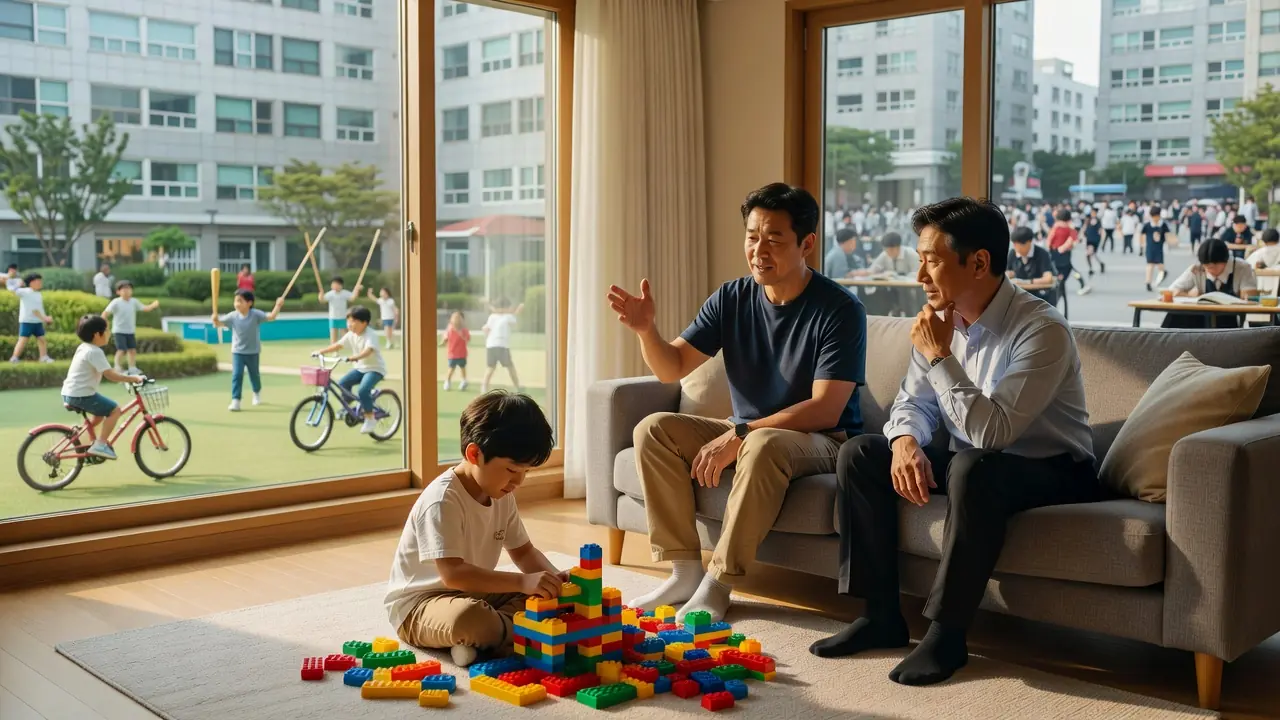
Broadcaster Jay Soon has spoken openly about how he thinks about his son Jun-beom's education, arguing that a child's ability to focus and a neighborhood full of playmates can count for more than the reputation of a top school district. His comments appeared in a video posted on the YouTube channel Eika Labs on the 24th, alongside dentist Joo Ki-hoon.
What Jay Soon Said About Grades and Focus
Jay Soon began by acknowledging that most parents want to give their children the best possible environment. He then said he is not troubled if Jun-beom does not perform well academically. In his view, the more important quality is what he called "butt power," meaning the capacity to sit down and concentrate on a task. He tied the idea not only to studying but also to play, mentioning building with Lego as an example.
Why Neighborhood Environment Came Up
Joo Ki-hoon described leaving Gangnam for Gangdong-gu so his child could spend more time in a setting that felt enjoyable. He said children there can play baseball together or roam freely within their apartment complex, and that the presence of many peers made the move satisfying for his family. Jay Soon agreed that choosing a school district simply because it is famous, such as Daechi-dong or Mokdong, is not necessarily the best decision.
The Only-Child Consideration
Jay Soon, who is raising an only child, said that access to play facilities and a group of peers to interact with mattered most to him. He also noted that an only child often has to make a deliberate effort to find friends. Joo Ki-hoon shared that, while living in Gangnam, he sometimes took his child to kids' cafes specifically so the child could meet other children.
Limits of These Personal Views
These remarks reflect the personal opinions of two parents, not research on school outcomes or child development. The video does not provide data comparing academic results across districts, so readers should treat it as one family's perspective rather than a general rule. Families weighing a move or school choice may still want to consider commute times, housing costs, and the specific programs available to their own children.