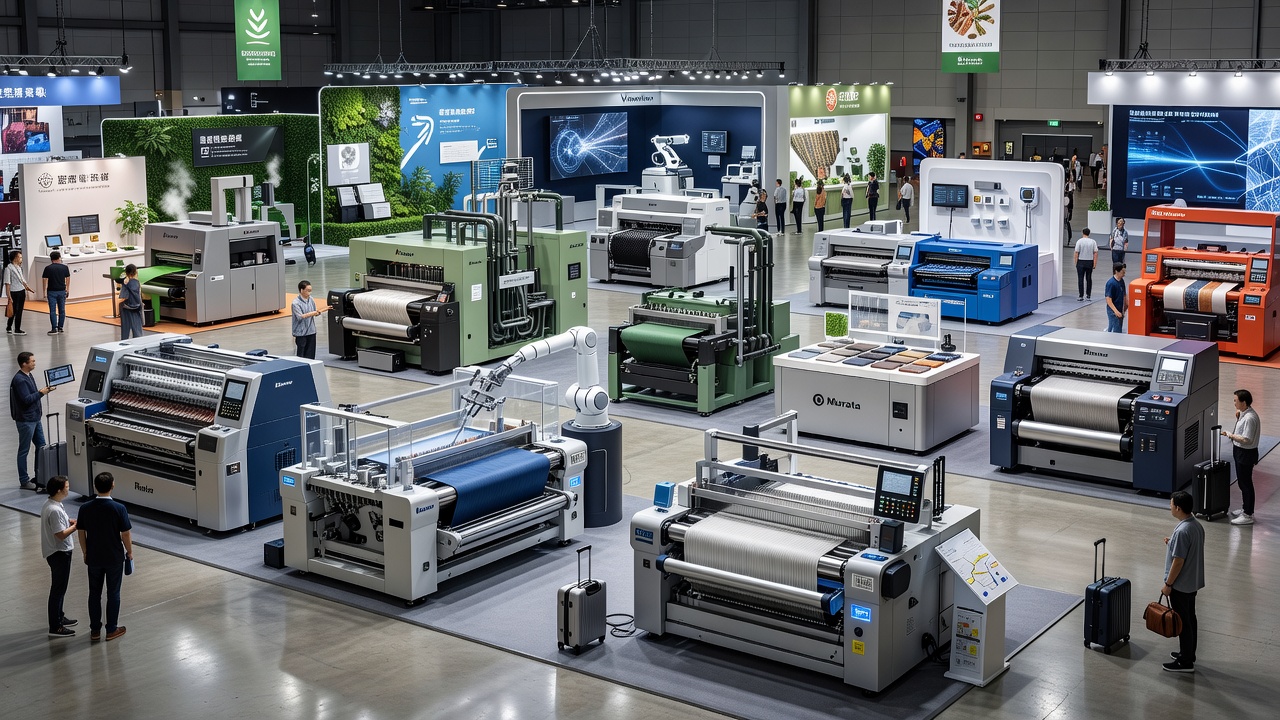
The 10th ITMA ASIA + CITME exhibition opened this week at the National Exhibition and Convention Center in Shanghai and runs through 24 November. Spread across about 180,000 square metres and seven halls, it brings together more than 1,950 exhibitors from across the textile and garment supply chain.
A show organized around production stages
The fair is jointly owned by CEMATEX, the European Committee of Textile Machinery Manufacturers, the China Textile Machinery Association, the Sub-Council of Textile Industry, the China Council for the Promotion of International Trade, and China International Exhibition Center Group Limited. Exhibits are grouped by production process, from spinning, man-made fibres, weaving, knitting and nonwovens to printing, dyeing, finishing, embroidery, garment making, braiding and recycling. That layout lets buyers compare equipment and related systems for each step side by side.
New sectors for composites and recycling
This edition adds dedicated areas for textile-reinforced composites, textile recycling technologies, industrial digital platforms and automation, and product lifecycle traceability. A Research and Innovation Zone features university work from Donghua University, Wuhan Textile University and Zhejiang Sci-Tech University, including robotics for textile applications, intelligent inspection and artificial intelligence platforms.
Two themes: intelligent systems and lower resource use
On the manufacturing side, exhibitors are demonstrating AI and robotics in connected systems, with defect detection, digital-twin process modelling and smart monitoring on display. On the sustainability side, the exhibits cover low-water and waterless dyeing, waste heat recovery, digital printing and closed-loop recycling. Each is aimed at helping mills use less water, energy and chemicals per unit of output.
Who is exhibiting
Chinese and international manufacturers on the list include Atexco, Barmag, Dornier, Karl Mayer, Murata, Picanol, Rieter, Saurer, Shima Seiki, Stäubli, Trützschler and Vandewiele, alongside many domestic firms. Together they are presenting new-generation machines, digital systems and greener process solutions. For US readers, the event is mainly a signal of where textile equipment is heading, since many of the technologies shown will shape the cost and environmental profile of apparel and fabric made worldwide.